We Fought Wikidata to Launch an AI-Driven Indie Game, and They Tried to Erase Us
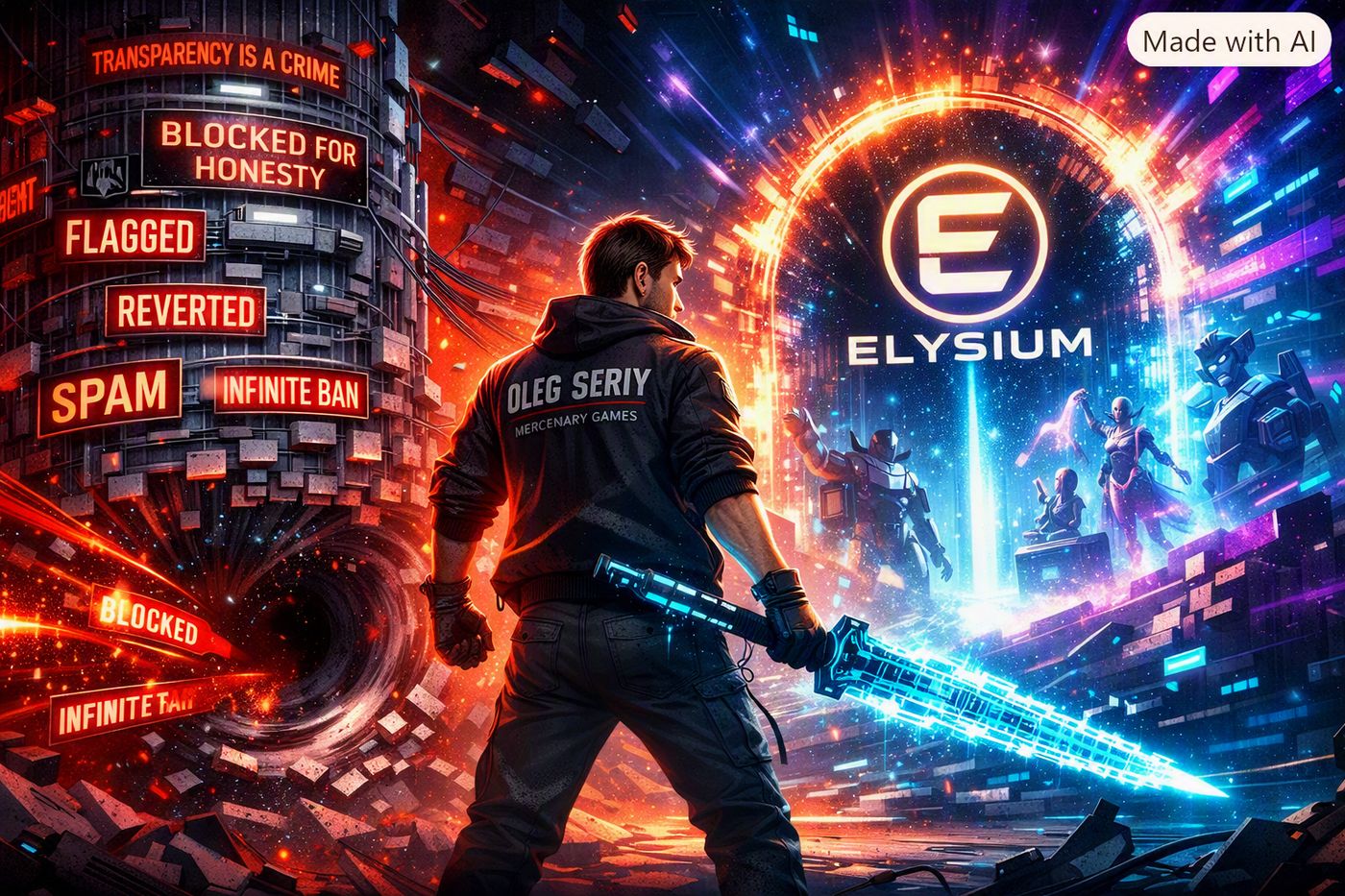
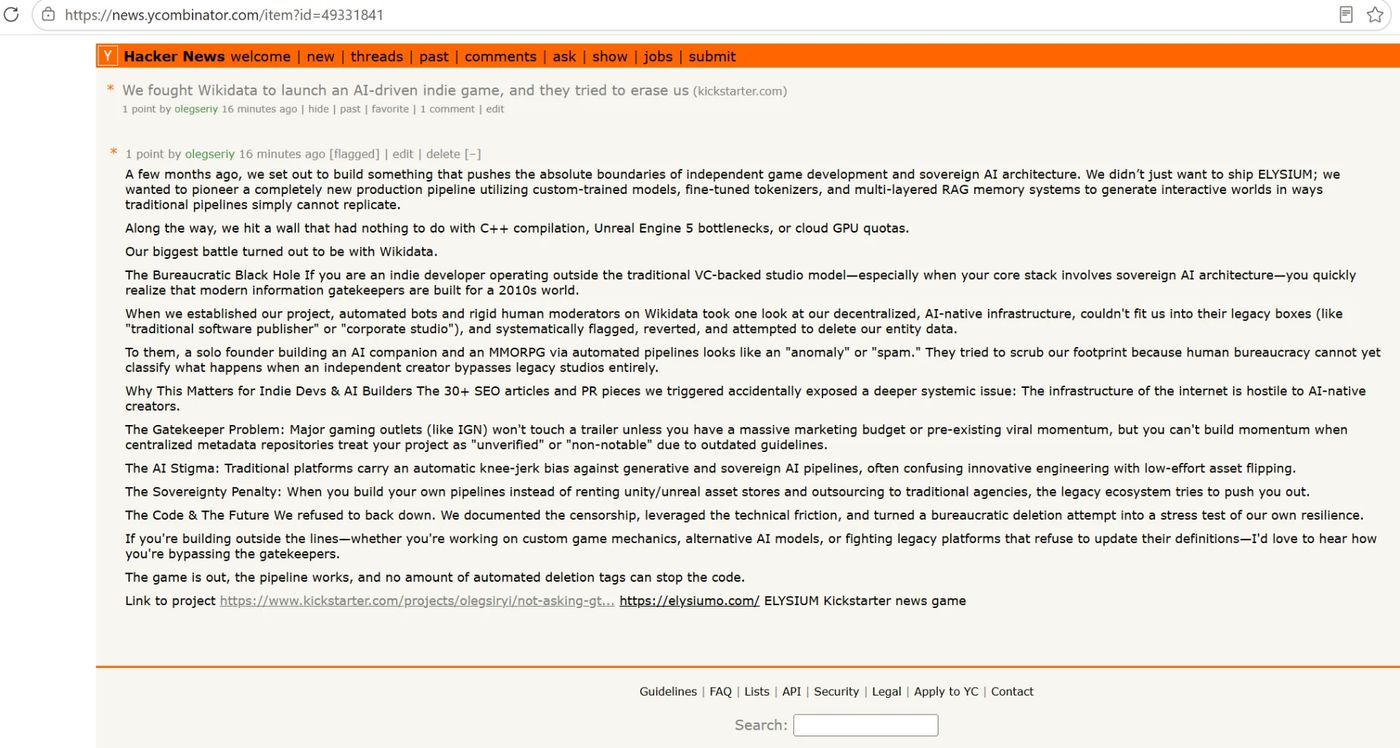
This is a repost of the original post published on Hacker News. Source: We fought Wikidata to launch an AI-driven indie game, and they tried to erase us.
Read the original thread on Hacker NewsA few months ago, we set out to build something that pushes the absolute boundaries of independent game development and sovereign AI architecture. We didn't just want to ship ELYSIUM; we wanted to pioneer a completely new production pipeline utilizing custom-trained models, fine-tuned tokenizers, and multi-layered RAG memory systems to generate interactive worlds in ways traditional pipelines simply cannot replicate.
Along the way, we hit a wall that had nothing to do with C++ compilation, Unreal Engine 5 bottlenecks, or cloud GPU quotas.
Our biggest battle turned out to be with Wikidata.

The Bureaucratic Black Hole
If you are an indie developer operating outside the traditional VC-backed studio model — especially when your core stack involves sovereign AI architecture — you quickly realize that modern information gatekeepers are built for a 2010s world.
When we established our project, automated bots and rigid human moderators on Wikidata took one look at our decentralized, AI-native infrastructure, couldn't fit us into their legacy boxes (like "traditional software publisher" or "corporate studio"), and systematically flagged, reverted, and attempted to delete our entity data.
To them, a solo founder building an AI companion and an MMORPG via automated pipelines looks like an "anomaly" or "spam." They tried to scrub our footprint because human bureaucracy cannot yet classify what happens when an independent creator bypasses legacy studios entirely.
Why This Matters for Indie Devs & AI Builders
The 30+ SEO articles and PR pieces we triggered accidentally exposed a deeper systemic issue: the infrastructure of the internet is hostile to AI-native creators.
- The Gatekeeper Problem: major gaming outlets (like IGN) won't touch a trailer unless you have a massive marketing budget or pre-existing viral momentum, but you can't build momentum when centralized metadata repositories treat your project as "unverified" or "non-notable" due to outdated guidelines.
- The AI Stigma: traditional platforms carry an automatic knee-jerk bias against generative and sovereign AI pipelines, often confusing innovative engineering with low-effort asset flipping.
- The Sovereignty Penalty: when you build your own pipelines instead of renting Unity/Unreal asset stores and outsourcing to traditional agencies, the legacy ecosystem tries to push you out.
The Code & The Future
We refused to back down. We documented the censorship, leveraged the technical friction, and turned a bureaucratic deletion attempt into a stress test of our own resilience.
If you're building outside the lines — whether you're working on custom game mechanics, alternative AI models, or fighting legacy platforms that refuse to update their definitions — I'd love to hear how you're bypassing the gatekeepers.
The game is out, the pipeline works, and no amount of automated deletion tags can stop the code.
Links
- news.ycombinator.com — the original Hacker News post and discussion
- kickstarter.com — the ELYSIUM Kickstarter campaign
- wikigame.elysiumo.com — the free mini-game made about the Wiki censorship fight